

Start with the single detail that makes the product yours. If you want a ceramic mug with each buyer’s name printed on it, you need a decorator who can personalize an existing mug blank you already like. If you drew the handle yourself and its shape is the reason a customer would buy it, you need a ceramics workshop that can build a physical sample from your sketch.
Both types of businesses often advertise “custom mugs,” which is why many first-time sellers waste money on the wrong sample. To choose the right manufacturer before paying a sample fee, send every candidate the same product brief, ask to see comparable work that proves the exact skill you need, and get a written description of what the sample will actually test.
The two mug designs below are illustrative examples—not a record of a specific factory quote—but the same method applies whether you are developing a pouch cut to your own sewing pattern, a handmade crochet gift, or a pendant cast from your own model.
Where to look for a maker who can actually do the work
Finding a reliable manufacturer starts with matching your design change to the right production route rather than searching the broadest directory you can find.
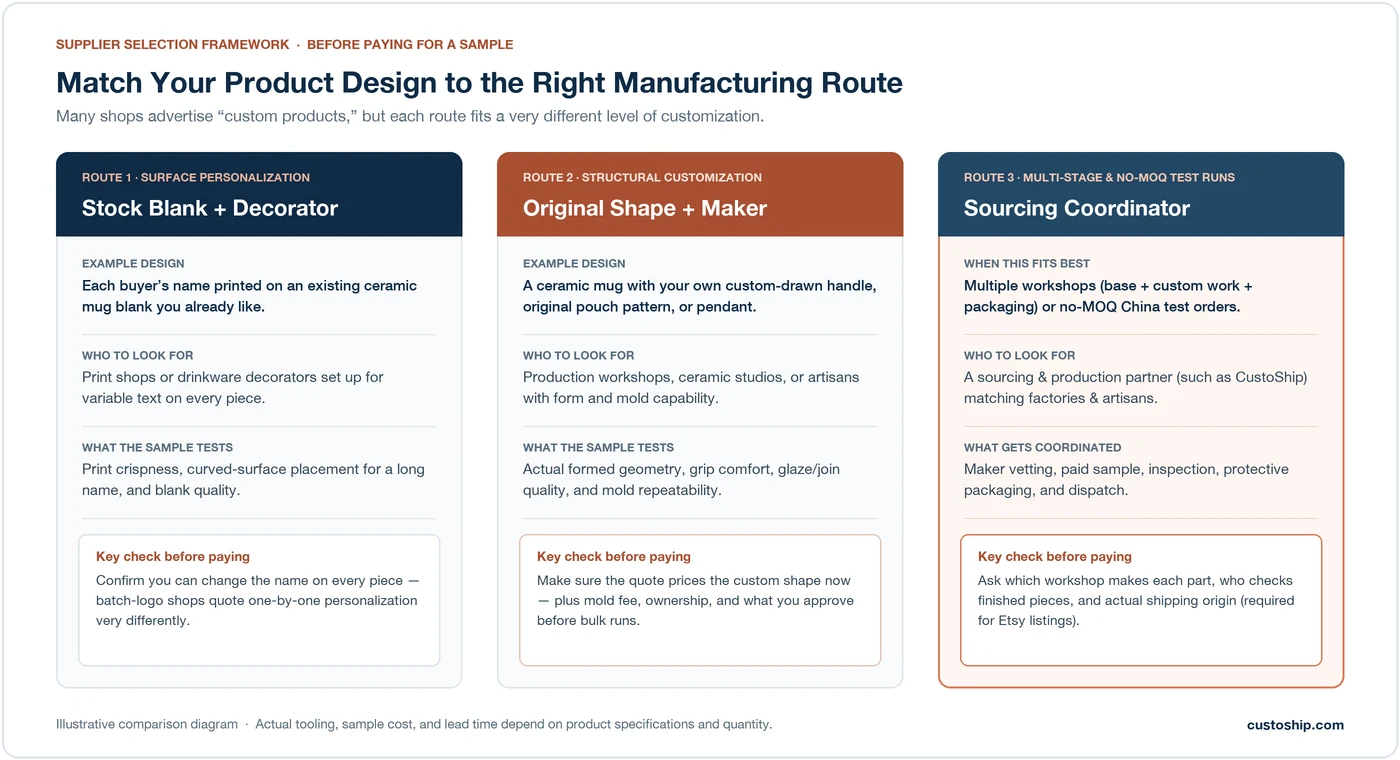
1. For a name printed on an existing mug (surface personalization)
Try searching for “ceramic mug decorator individual names” and add your city or region if you want to inspect a sample in person. Start with print shops that show decorated drinkware in their portfolio. Ask which blank mug they use and confirm whether you can change the name on every single piece in your first order—a shop set up to print the same corporate logo across a full batch will often quote one-by-one personalization very differently.
2. For a mug with an original handle (structural customization)
Search for “custom ceramic mug shape manufacturer” or “ceramic studio production pottery” plus a region, and focus on workshops that show multiple distinct forms they have produced. If you find a potter whose craft is close but who only makes one-off pieces, ask which production studio they would recommend for a short repeat run. When searching for a North American factory, you can also filter directories by capability and location using Thomasnet’s supplier search guide, though industrial directories often carry higher minimums than a first test order requires.
3. For handmade or craft-intensive products
Look for makers who can repeat the particular detail your design depends on—for example, the shape of a petal or the join between two yarn colors on a crochet ornament. A close-up of that single detail tells you far more than a catalog of finished gifts. If you are sourcing handmade yarn products, our guide to finding a custom crochet manufacturer explains which structural details to verify before sampling.
4. Direct factory outreach vs. working with a sourcing coordinator
Many custom products involve more than one workshop: one factory produces the base item, another handles personalization or glazing, and a third makes protective or branded boxes. Whenever multiple workshops are involved, ask who makes the base item, who adds the customization, and who inspects the finished piece before dispatch.
Reaching out directly works well when you only need one local studio and have time to manage specifications and quality checks yourself. If you are an Etsy, Shopify, or independent store seller coordinating custom work, packaging, inspection, and international shipping for a small test run, a dedicated coordinator can prevent costly handoff gaps. At CustoShip, our product sourcing service in China matches your brief with vetted external factories and artisans, coordinates paid samples, and manages inspection and packing with no minimum order quantity.
Give every candidate the same brief they can quote
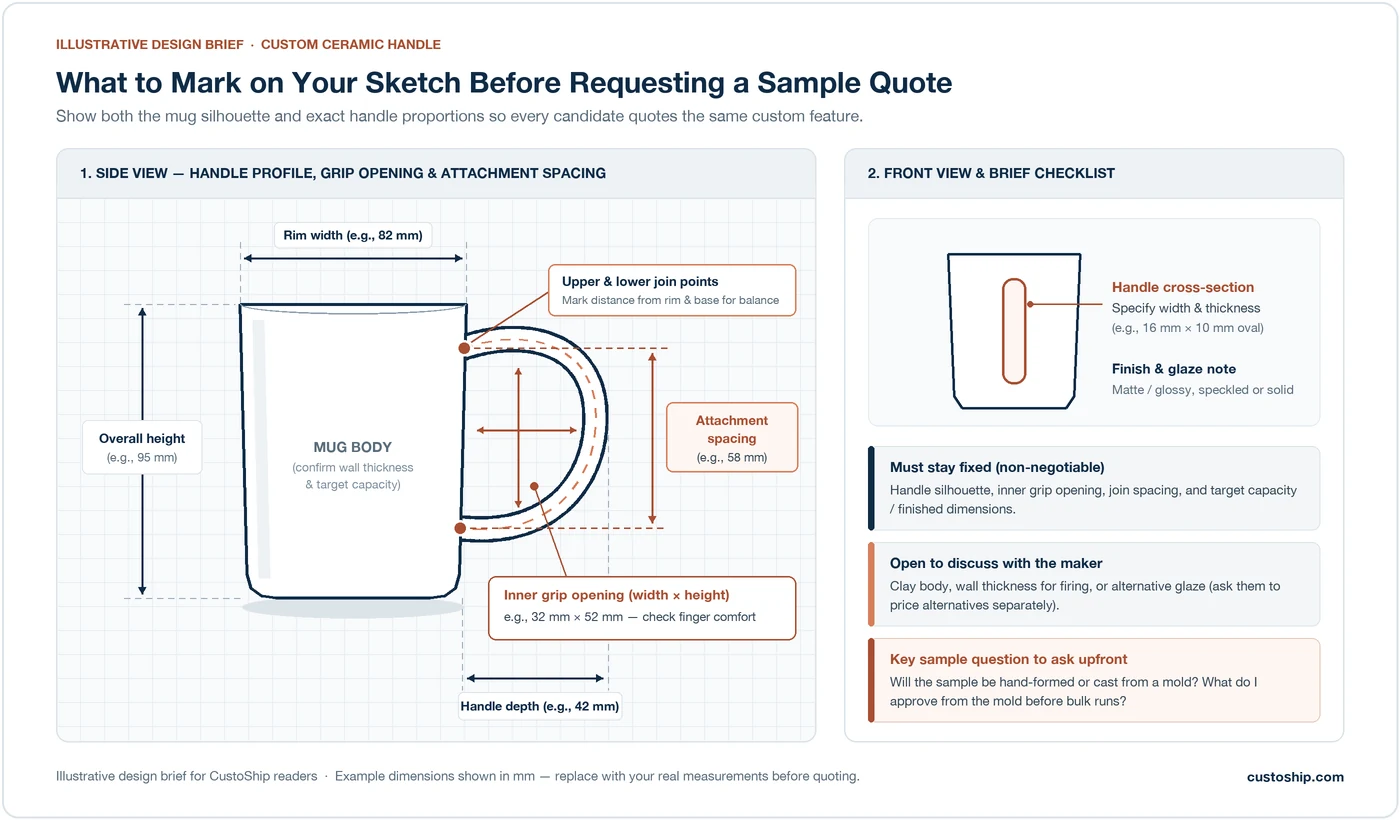
Put a sketch or reference photo beside a short written list of what must stay fixed and what can change. Specify the material, surface finish, proposed test quantity, delivery country, and when you need the sample in hand. If you are open to an alternative material or stock blank to lower startup cost, ask the maker to price it separately so every quote still covers your original design.
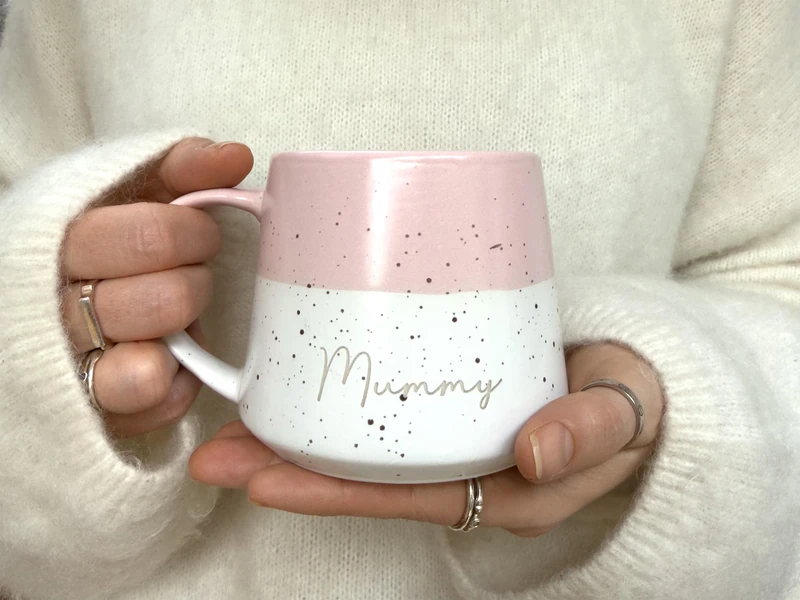
For the personalized mug example
Attach your lettering layout together with a long example name—a product photo showing a short four-letter name leaves the fit of your longest buyer names unresolved. Mark which side should face outward when the mug is held in the right hand, and ask for both the printable area on the proposed blank and a close-up of similar lettering applied to a curved surface.
For the original handle example
Send a side view with the inner grip opening marked, the distance between the upper and lower attachment points, handle depth, and the dimensions you want on the finished mug, paired with a front view showing handle width and thickness. Ask for a side view of a comparable handle the workshop has already made and a plain explanation of how they would form yours. If they propose hand-forming the initial sample and using a mold for production, ask what proof you will approve from that mold before the full order starts.
Include protective packaging in the initial quote
For fragile items such as ceramic mugs, ask about individual protective packaging during your first quote rather than waiting until production finishes. A low unit price can disappear quickly if pieces chip in transit or require custom cartons with a separate factory minimum later. Our custom product packaging guide covers how to align box structure and packaging quantities with a small test order.
Extra checks for Etsy sellers
If you sell on Etsy, confirm who will physically make the item and where orders will ship from before committing to a supplier. Under Etsy’s Creativity Standards and Etsy’s production partner guidance, production partners are allowed for original seller designs and eligible items personalized with a buyer’s own text or image—simply reselling an unmodified off-the-shelf blank is not solved by adding a production partner. Disclose the actual production partner on the relevant listings and list the accurate shipping origin. If a sourcing service coordinates the project, ask for the actual maker’s role and location so you can describe the arrangement accurately.
A first inquiry template you can copy and adapt
Hi [Name],
I’m developing [product] for my shop and have attached [drawing or artwork]. The main feature I need to test is [specific feature—for example, the custom handle shape / variable name placement on a curved mug]. I’d like one physical sample and a separate estimate for [quantity] pieces delivered to [destination country].
- How would you produce that feature? Which steps would your team handle in-house, and which would another workshop handle?
- Could you share a photo of a comparable piece you’re allowed to show and point out the part your team made?
- Please describe exactly what I will receive as the paid sample, and list the sample fee, any setup or mold charge (plus who owns the mold), protective packing, shipping, and the cost of a revision separately.
- For the first production run, please flag any minimums per shape or color and tell me when both the sample and production pieces could be ready.
Thank you,
[Your Name]
How to compare two quotes for the same design
Suppose you sent your original-handle sketch to two shops. Maker A offers a decorated sample on its current stock mug and leaves “custom handle” for a later quote. Maker B offers a physically formed sample following your drawing and lists a separate mold charge for repeat runs.
Paying Maker A would let you review glaze and lettering, but you would still have no way to test the grip—the exact detail customers would buy the mug for. Ask Maker A to quote the handle explicitly before comparing prices. For the name-only design on a stock mug, by contrast, a sample on an existing blank could already cover everything you need to test.
Copy this table and fill it in strictly from the two written replies. Mark any missing answer as open so an omitted fee never gets counted as zero.
| What to record from each written quote | Maker A | Maker B |
|---|---|---|
| Exact feature the physical sample will let me test | ||
| Comparable piece shown and the part this maker produced | ||
| Sample fee, shipping cost to my address, and sample timing | ||
| Setup or mold fee, who controls the mold, and its cost on reorders | ||
| Cost and timing of revisions after I inspect the sample | ||
| First-run quantity, unit price, and minimum per shape or color | ||
| Protective / custom packaging and delivery to the same destination |
Choose the maker whose physical sample directly answers your biggest open design question at a total cost you can approve. If neither reply specifies the feature in writing, send back a marked-up sketch and request an amended quote before paying.
Payment verification before sending a sample deposit: Check that the business name on the written quote matches the invoice and payment beneficiary instructions, and resolve any discrepancy directly with your contact before transferring funds.
How to get a product manufactured after you choose a maker
Inspect the physical sample side by side against your written brief. Hold the personalized mug the way a customer would and check where a long name sits relative to the handle. On a custom shape, measure the inner grip opening, check balance when filled, and inspect the glaze and join points. Mark any adjustment directly on the drawing, date the revised version, and agree on the cost of another sample if you need one.
Once you approve a sample, keep it as your golden reference. Cite that approved version date on the first purchase order alongside the quantity, agreed unit price, and packing instructions. For a Shopify preorder or a launch on your own store, confirm when finished pieces will actually be ready to ship before promising customers a dispatch window. When you are ready to move from an approved sample into a first run, our small batch manufacturing guide walks through planning quantities, inspection, and packing step by step.
Keep a copy of the approved lettering or artwork with every production order. At CustoShip, if our team or the workshop makes a production or handling error, we coordinate a remake; if the finished item matches a misspelling or layout you approved, the remake is paid by the seller. You can read the full details in our refund and remake policy.
Frequently asked questions
Can I find a manufacturer if I only have a hand-drawn sketch and no CAD file?
Yes. For many ceramic, sewn, crochet, and gift products, a clear hand-drawn sketch with key dimensions and reference photos is enough to check capability and request sample quotes. Clearly mark which measurements cannot change so the workshop can tell you whether they can form it from your sketch or whether technical modeling or mold prep is needed first.
Should I look for a local manufacturer or work with workshops in China?
It depends on your product, test budget, and how many stages are involved. A local workshop can be practical for a single-process item you want to inspect in person. Sourcing in China often gives wider access to specialist factories, craftspeople, and custom packaging in one supply chain—especially when paired with a coordination partner that supports small test orders without high factory minimums.
Who owns the custom mold if I pay a tooling fee?
Never assume mold ownership is automatic. Confirm in writing before paying whether the tooling charge gives you exclusive use of the mold, how long the workshop stores it, and whether you can reuse it on reorders without paying a repeat setup fee.
Does “no minimum order quantity” mean samples and tooling are free?
No. No MOQ means you are not forced to commit to hundreds of units just to test a new product. Paid samples, custom molds or setup, materials, custom packaging, and shipping are still quoted clearly according to the work your design requires.
[…] You can contact specialist workshops and manufacturers, look through supplier marketplaces, or work with a sourcing and production coordination partner. Give each candidate the same product brief so you can compare what they will actually make, what the sample covers and what the first order will cost. Our step-by-step guide shows how to compare manufacturers before paying for a sample. […]