

THE SELLER’S WORKSHOP · ETSY PRODUCT DEVELOPMENT
A practical guide to choosing a product, working with makers, and handling orders beyond a shared print-on-demand catalogue.
If you are learning how to sell things on Etsy, start with an eligible product and a clear customer, validate a sample and its costs, then open your shop, create accurate listings, and prepare to deliver each order as promised. If someone else makes or ships the product, your creative role and the production arrangement matter just as much as the listing.
At CustoShip, we approach this as longtime Etsy sellers. We understand why a ready-to-use POD catalogue is appealing. We also know the question that follows: when other shops can choose the same base product, what gives a buyer a reason to choose yours?
Our preferred starting point is a product brief: what should be different about the design, material, finish, or buyer’s customization? That opens up possibilities in crochet, ceramics, and jewelry, alongside printing, engraving, and embroidery.
PRODUCT DEVELOPMENT / CUSTOSHIP
Make the product your own.
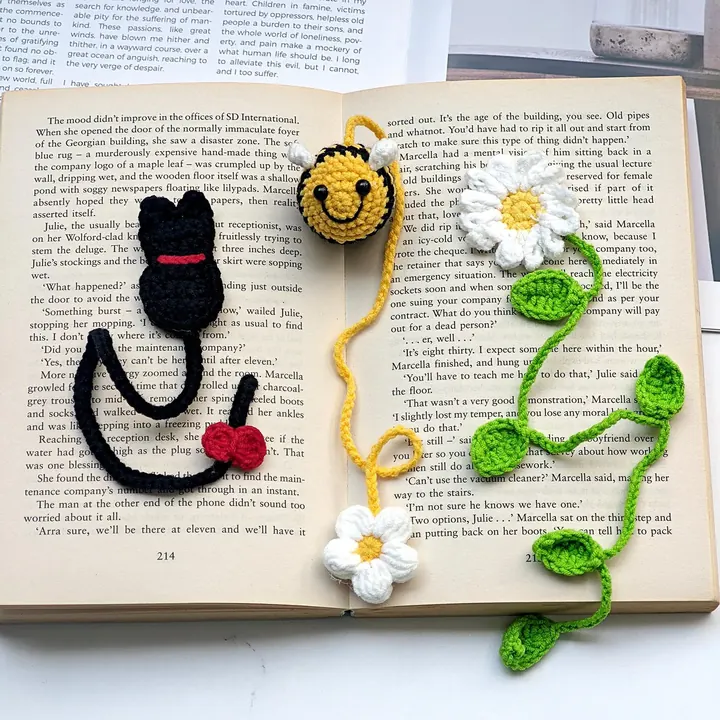

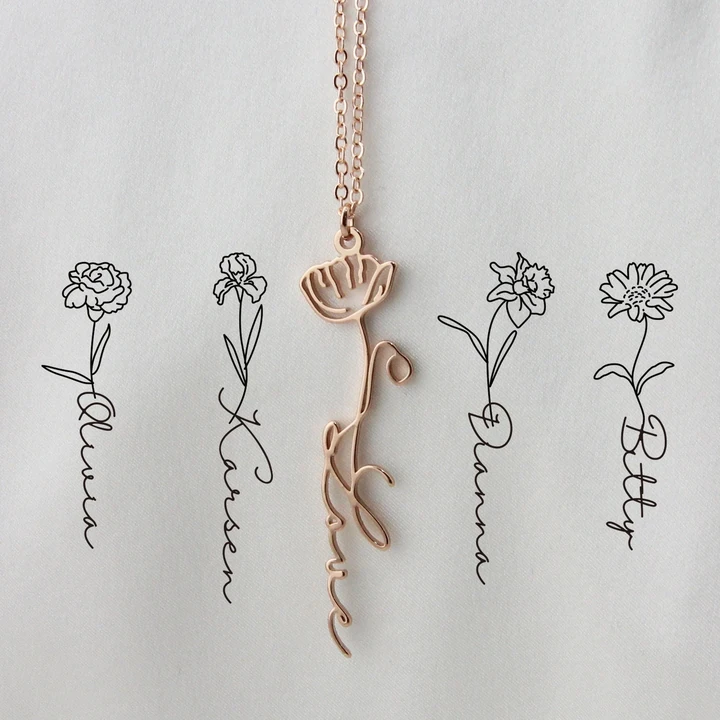
Which product categories are worth researching on Etsy?
Etsy’s 2025 annual report identifies six leading retail categories: home and living, jewelry and personal accessories, apparel, craft supplies, paper and party supplies, and toys and games. These are broad market categories—not a ranking of products a new shop is likely to sell successfully.
For our work with custom products, we would narrow that landscape as follows:
| Category | Possible custom direction | Question to validate |
|---|---|---|
| Home and living | A ceramic ring dish developed around your own shape or illustration | Can the finish and protective packaging be reproduced consistently? |
| Jewelry and personal accessories | An original pendant design with a defined engraving option | Are the design rights, metal specifications, and construction clear? |
| Apparel | Your own embroidery placement or garment details | Does the difference justify its cost and sizing complexity? |
| Craft supplies | A carefully specified crochet kit or original pattern | Is the item correctly categorized and the included content accurate? |
| Paper and party supplies | Original wedding stationery or buyer-personalized event details | Can proofs, name accuracy, and event deadlines be controlled? |
| Toys and games | A design-led product developed for its intended age group | Can product safety, labeling, and testing requirements be met? |
These are development ideas, not automatically eligible Etsy listings. Toys require additional safety work; they are not our default recommendation for a first launch.
What recent Etsy trends suggest
In its Fall and Winter 2026 Seller Trend Report, Etsy reports searches up 280% for hand-painted items, 150% for hand-thrown items, and 1,400% for personalized gifts for friends. The report’s data is as of 14 September 2026 and compares activity over the preceding three months with the same period a year earlier.
The earlier Spring and Summer 2026 report, using data as of 10 February 2026, highlighted crochet clothing sales up 36% and whimsical jewelry searches up 84%. Those figures concern different products and an earlier reporting period; they do not establish demand for every crochet bouquet or pendant.
Our takeaway is to investigate texture, recognizable craftsmanship, and meaningful personalization. A trend suggests a direction to test. It does not prove that a particular niche has low competition or enough margin.
Why another standard POD listing can be hard to differentiate
Many catalogue-based POD services make it straightforward to select a blank, upload artwork, and launch a listing. That accessibility is useful for testing original designs. It also makes the underlying product available to other sellers.
If your offer is the same mug, the same print area, and a familiar phrase, the buyer has fewer reasons to choose on anything other than price, reviews, or delivery. More listings will not necessarily fix that problem.
We would not call all POD saturated. Printing is not limited to heat transfers, and an original illustration or well-defined audience can still make a printed product distinctive. The limitation appears when the catalogue sets every meaningful product decision and the artwork adds little that is specific to your shop.
Starting with a shared blank
You choose from existing sizes, materials, colors, and print areas. Your main creative space may be the surface design.
Starting with a product brief
You investigate the pattern, form, construction, material, finish, and personalization together, then confirm what a maker can produce.
The second route takes more development work and may involve sample fees or minimum quantities. Its value is that you have more product decisions to make—and a more specific story to tell buyers. It does not guarantee demand or prevent imitation.
For a closer comparison of production models, see our guide to dropshipping personalized products.
Etsy dropshipping: what can you actually outsource?
Etsy’s official guidance distinguishes ordinary ready-made dropshipping from eligible production assistance. A supplier shipping directly to your customer does not, by itself, make a product eligible.
- Your original design: a qualifying production partner can help manufacture it, with the required disclosure.
- Buyer’s personalization: a partner can produce eligible items using the buyer’s unique text or image.
- Ordinary ready-made resale: adding your packaging or naming a supplier as a production partner does not create eligibility. Specific exceptions, including qualifying craft and party supplies, have their own requirements.
The Creativity Standards define the product categories. A handmade item bought from an artisan is not automatically “made by” you. For crochet, ceramics, or jewelry, establish your actual design or making role rather than relying on the supplier’s handmade status.
Our role is to help organize a feasible production arrangement. Etsy determines whether a listing meets its policies; we cannot promise blanket approval for a product or shop.
Three handmade product directions we would investigate
We have built relationships with factories and artisans across multiple processes. Crochet, ceramics, and jewelry are especially useful conversations because customization can reach the product itself. The following are illustrative briefs, not claims about existing customer projects.
1. Crochet: develop a recognizable pattern or arrangement
Instead of reselling an existing crochet flower from a supplier’s catalogue, you could develop your own bouquet concept: flower shapes, proportions, a documented pattern, color arrangement, and presentation. Where buyer personalization is the basis of eligibility, confirm that the actual customization meets Etsy’s requirements.
Example brief: a small graduation bouquet with your own flower pattern, agreed yarn colors, a defined arrangement, and an optional name detail incorporated into the piece. Simply adding a personalized gift tag to an unchanged supplier product is not the same arrangement.
We would check the approved pattern, yarn specification, dimensions, stem construction, finishing, and packaging. Handwork needs acceptable tolerances and realistic capacity. A maker’s skill does not make every variation equally quick to produce.
2. Ceramics: distinguish the form as well as the decoration
A stock mug with a transferred image is one option. An original ring-dish profile, sculpted pet-inspired form, or hand-painted composition offers different development decisions. We can help discuss those ideas with suitable ceramic makers and organize samples.
Example brief: a ring dish based on your own scalloped outline and illustration, with an agreed glaze palette and a buyer’s initials. The sample needs to show the finish buyers will actually receive.
For product quality inspection, we would agree on dimensions, glaze variation, surface defects, and protective packing. Kiln processes and breakage affect cost and lead time. Food-contact products also need appropriate safety evidence for the intended market; an attractive sample is not that evidence.
3. Jewelry: turn your design details into specifications
Jewelry can start with your own pendant drawing, component arrangement, or meaningful personalization. The detail matters: dimensions, chain length, material, finish, engraving position, and fastening all affect the result.
Example brief: your original pendant silhouette with a defined engraving area and chain specification. We would compare the physical sample with the approved drawing, check the finish and clasp, and confirm material documentation requirements.
We can help match a project with artisans or specialist workshops. Mold fees, samples, material availability, and minimum quantities depend on the design. We do not treat every supplier-listed pendant as an original product or promise every design can be made one unit at a time.
How to sell stuff on Etsy in 7 practical steps

Step 1. Validate a buyer, occasion, and price range
Choose something narrower than “jewelry” or “crochet.” Who is buying, for whom, and why? Compare relevant listings, delivery promises, personalization options, and recurring review complaints. Identify a buyer problem your product could address.
Use Etsy’s Marketplace Insights where available to examine Etsy search demand and competition. Google search-volume estimates help plan content, but they are not Etsy purchase counts. Do not copy another seller’s design or photographs.
Step 2. Write a custom product brief
Record your original artwork or design, dimensions, materials, finish, personalization fields, intended market, target selling price, and expected order volume. Include what must stay consistent and where handmade variation is acceptable.
Separate a requirement from an idea. If you have only a concept, say so; we can discuss the development work needed before anyone can quote or commit to production.
Step 3. Choose an Etsy production partner for the actual process
When deciding how to find a production partner on Etsy, match the maker to the process first. A crochet artisan, ceramic workshop, jeweler, printer, and warehouse perform different jobs.
Etsy’s production partner guidance explains eligible roles and disclosure. For a production partner in China, record the real manufacturing role and location. A sourcing or fulfillment coordinator is not automatically the manufacturer you should disclose. Our partner-selection guide covers operational questions to ask.
Step 4. Approve a physical sample
Check the sample against a written specification. For a personalized item, approve spelling rules, typeface, placement, and the proof process. For handmade work, define an acceptable range of finish and dimensions.
Keep a record of the approved version and photograph it. Etsy’s image policy, updated 5 November 2026, requires a real, unedited product photo for most products, with specified exceptions such as authorized mockups for qualifying POD. Do not use a generated product concept as evidence of a finished item.
Step 5. Price the complete order
Include production, any allocated development costs, personalization labor, inspection, packaging, shipping, applicable duties, platform fees, advertising, and a reasonable allowance for problems. Small batch manufacturing can help test a concept when available; it does not remove setup costs.
Etsy’s fee policy lists a $0.20 listing fee and a 6.5% transaction fee on the relevant sale amount. Payment-processing rates depend on your bank location, and other fees can apply. Use your actual account conditions when calculating margin.
Step 6. Open the shop and build an accurate listing
Follow Etsy’s shop-opening instructions to set your shop details, complete the required identity and payment setup, and create your first listing. Onboarding requirements and possible setup charges depend on your circumstances.
Use a readable title, relevant attributes and tags, sample photos, and a description that explains materials, size, personalization, and care. Set realistic production and transit times, state the actual dispatch location, and add required production-partner information. If the parcel leaves Guangzhou, do not describe it as shipping from the US.
Step 7. Prepare Etsy order fulfillment and customer support
Before accepting orders, decide how buyer details reach the maker, who checks proofs, how items are matched to shipping labels, and how tracking returns to the seller. Our custom-order fulfillment workflow explains these handoffs in more detail.
Etsy’s shipping policy keeps the seller responsible for delivery even when a fulfillment service is used, and currently requires DDP shipping for US orders, subject to its narrow stated exceptions. Confirm the route before quoting. Keep production time separate from transit time and mark orders shipped only after dispatch.
Also agree on damaged-item evidence, remake decisions, tracking investigations, and response ownership. A carrier investigation does not pause your buyer communication or Etsy case deadlines. Review early orders before increasing volume.
How CustoShip helps you build beyond a standard catalogue
We can help connect your product requirements with factories and craftspeople, then coordinate the work around that product. Our network includes crochet makers, ceramic artisans, and jewelry workshops, as well as processes such as 3D printing, heat transfer printing, laser engraving, UV DTF transfers, and embroidery.
That lets us discuss more than a print file: an original pattern, a different construction, a particular finish, or a personalization process. Our support can include custom product sourcing, maker matching, sampling, production coordination, agreed quality checks, packaging, and fulfillment.
You bring the creative direction and intended customer; together, we establish what can be produced, by whom, at what cost, and on what schedule. The manufacturing arrangement and disclosures must still fit the product and Etsy’s current rules.
For a first conversation, send your drawings or product concept, customization requirements, target price, expected quantities, and destination countries. We will use those details to discuss feasibility, sampling, minimums, and the next decisions—not assume every idea is ready for one-piece dropshipping.
Questions about selling on Etsy and Etsy dropshipping
How do I start selling things on Etsy as a beginner?
Pick an eligible product and specific buyer, validate a physical sample and full costs, then complete Etsy’s shop setup and publish an accurate listing. Start with a manageable range so you can test product quality, delivery, and customer response.
Do I have to make everything myself?
No. Qualifying original designs can be produced with disclosed production assistance. Eligible buyer-personalized products are another route. The arrangement must meet Etsy’s rules; outsourcing does not remove your responsibility for the listing or order.
Is Etsy dropshipping allowed?
Ordinary ready-made dropshipping is generally prohibited, with specific exceptions such as qualifying craft and party supplies. Eligible production assistance is different. Check the product, your creative role, and the disclosure requirements before listing.
Can I resell crochet or ceramics just because they are handmade?
No. An artisan making the item does not automatically make it your handmade product. Establish an eligible original-design or buyer-personalized arrangement, or another applicable category, rather than simply relabeling a supplier’s finished stock.
Is print on demand too saturated to start?
There is no single saturation level for all POD. We would assess the niche, artwork, product choices, pricing, and delivery. If buyers can find near-identical offers, develop a clearer difference before adding more listings.
Can I work with a production partner in China?
Location alone does not establish eligibility. Choose a qualifying production arrangement, disclose the required partner information, and accurately describe where orders ship from. Do not present a coordinator or wholesaler as a maker if that is not their role.
Can every custom handmade product be made one order at a time?
No. Individual-order production depends on the process, materials, setup, capacity, and economics. Some projects suit made-to-order production; others need a batch. Confirm samples, minimums, and lead times before promising availability.
What should I send CustoShip for an initial discussion?
Send your original design or concept, product specifications, personalization needs, target price, expected quantity, and destination countries. Tell us whether you need development, production support, packaging, or fulfillment so we can discuss a suitable route.